
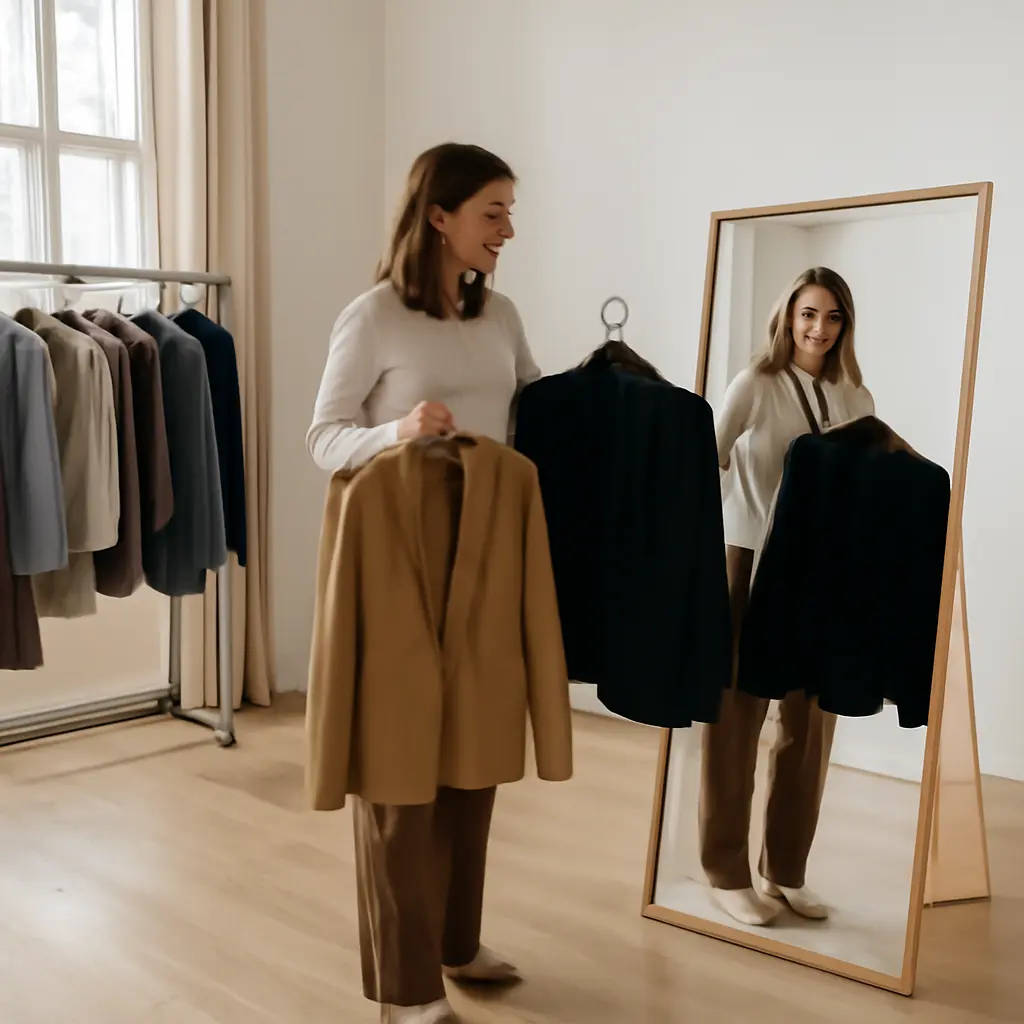
A wardrobe that works with your face and body is a coordinated set of clothes chosen to suit your proportions, coloring, comfort, and daily life—not a collection built around rigid “body-type” rules. The most useful approach is to test fit and color in real conditions, then prioritize versatile pieces you will wear often. That matters because clothing is a substantial household expense: the U.S. Bureau of Labor Statistics reported that American consumer units spent an average of $2,041 on apparel and related services in 2023. This guide explains how to assess fit, use color near your face, build outfits for your proportions, and make practical purchases without treating style advice as a set of limitations.
How wardrobe fit and color work with your face and body
A body-and-face-aware wardrobe is a method of selecting garments whose lines, colors, proportions, and construction support the wearer’s intended appearance and activities. There is no single scientific system that assigns everyone a definitive body shape or seasonal color type. Instead, treat labels such as “pear,” “rectangle,” or “cool summer” as informal starting points, then validate them with fit, comfort, and observation.
The practical principle is straightforward: clothing changes visual emphasis. A jacket’s shoulder line can make the upper body appear more structured; a trouser rise changes where the leg line seems to begin; and a neckline places color and shape close to the face. These effects are styling choices, not corrections to bodies. The best wardrobe supports the wearer’s priorities—whether that means ease of movement, a polished work look, visual balance, or simply feeling like oneself.
Fit and proportion shape a wardrobe that works with your body
Fit describes how a garment sits and moves on a particular person; proportion describes the relationship between garment elements and the wearer’s visible lines. The U.S. National Institute of Standards and Technology explains that apparel sizing systems use body measurements to organize sizes, but a size label is not a guarantee of identical fit across brands or styles. A size is a starting point, not a verdict about the body.
Fit begins with measurements and movement
Fit is the relationship between a garment’s dimensions and the wearer’s body in both standing and moving positions. Take measurements relevant to the garment—such as chest or bust, waist, hip, inseam, and shoulder—and compare them with each brand’s size chart. Check the garment while sitting, reaching, walking, and raising your arms. Drag lines, strained closures, slipping straps, and hems that catch underfoot can indicate a fit issue, though fabric and intended design also matter.
Sizing varies because brands use different patterns, ease allowances, and fit intentions. The NIST’s clothing-size research and ASTM International’s measurement standards illustrate why standardized body measurements are useful, while ready-to-wear garments still require individual evaluation. If one part fits and another does not, tailoring, alternate cuts, or separates in different sizes may work better than forcing a single size across the body.
Proportion is a styling tool, not a body-type rule
Proportion concerns how lengths, volumes, and visual divisions relate to one another. A high-rise bottom, cropped jacket, long open layer, or wide-leg trouser can each alter the apparent balance of an outfit. Rather than sorting people into fixed shapes, identify what you want an outfit to emphasize and adjust one element at a time—for example, the hem length, waist placement, or shoulder structure.
Common style categories such as pear-shaped, apple-shaped, hourglass, and straight are hyponyms of broad body-shape language: they name narrower patterns within that informal category. They cannot capture every person’s proportions, posture, mobility, or preferences. Use them only when they help you describe a garment problem or find useful examples; do not treat them as prescriptions.
Fabric and construction determine how clothes behave
Fabric weight, stretch, drape, and structure affect both comfort and silhouette. A fluid fabric follows movement; a crisp woven fabric tends to hold a defined line; stretch can improve mobility but may also change how a garment supports or recovers. Seams, darts, lining, and closures further influence fit. When trying clothes, assess whether the fabric performs the way you need in the setting where you will wear it.
This is why a bridge between body fit and visual proportion matters: a look may appear balanced on a hanger yet feel restrictive in motion. Once a garment passes the movement test, its length and volume can be evaluated as styling choices rather than as compromises imposed by a size label.
Color and neckline connect a wardrobe to your face
Color suitability is the way a garment’s hue, value, and intensity interact with the wearer’s complexion, hair, eyes, and personal preferences. The color appearance of clothing also changes with illumination and surrounding colors. The International Commission on Illumination (CIE) describes color as a perceptual experience shaped by viewing conditions, which is why a shade can look different in a store, outdoors, and under office lighting.
Test colors in consistent light
A practical color test compares garments near the face in indirect daylight, with minimal competing colors. Notice whether a shade makes you feel lively and comfortable, or whether you prefer its effect in a different light. Undertone systems—often described as warm, cool, or neutral—can offer vocabulary, but they are not a medical or universally standardized classification. Personal taste and cultural context are valid parts of the decision.
For a useful comparison, hold two similar colors near the face rather than relying on a color name or online image. Record which one you prefer in daylight and in the lighting where you commonly spend time. This small test reduces guesswork and is especially helpful before buying a coat, shirt, scarf, or other item worn close to the face.
Necklines and accessories frame the face
A neckline is the opening and edge shape around the neck and upper chest. Crew, V, scoop, boat, and collar styles create different visual frames, while earrings, scarves, glasses, and collars add nearby color and shape. Choose these details according to comfort, function, and the impression you want—not according to a rule that a particular face shape must wear a particular neckline.
Face-shape labels such as oval, round, square, and heart-shaped are informal descriptors, not definitive measurements. If a frame, collar, or accessory feels crowded or distracting, try a different scale or spacing. The most reliable test is the actual combination on the wearer, in the mirror and in the relevant lighting.
Build a workable color palette
A wardrobe palette is a small group of colors that coordinate across garments and suit the wearer’s needs. Start with a few neutrals you genuinely like, then add accent colors and prints. Repeating colors across tops, bottoms, layers, and accessories can make combinations easier, but there is no required number of colors or universal palette for a complexion.
Color near the face and color elsewhere need not follow the same rules. If you love a shade that feels less flattering as a top, try it in trousers, a bag, or shoes; alternatively, place a preferred color in a scarf or collar. This lets personal style and practical coordination work together.
A functional wardrobe turns good fit into repeatable outfits
A functional wardrobe is a collection of garments that supports recurring activities and can be combined without excessive effort. The U.S. Environmental Protection Agency reports that 17 million tons of textiles were generated in the United States in 2018, with 2.5 million tons recycled. Those figures include textiles beyond clothing, but they underline the value of considering durability, repair, and actual use before buying.
Start with real-life outfit needs
An outfit formula is a repeatable combination—such as a comfortable trouser, a top that works under a layer, and shoes suitable for the day. List the settings you dress for, including work, travel, home, exercise, and events. Note what is missing, what already fits well, and which items are worn repeatedly. This makes shopping more specific than chasing a trend or buying an isolated statement piece.
A useful wardrobe audit can track each garment’s fit, comfort, condition, and number of compatible outfits. If an item only works with one other piece, consider whether it fills an important role before replacing it. If a favorite garment is close to working, alterations or repair may be a more practical option than buying another version.
Choose versatile pieces without chasing a capsule formula
A capsule wardrobe is a deliberately limited set of pieces designed to mix and match. It can simplify dressing, but no universal capsule count suits every climate, occupation, budget, laundry routine, or body. A more flexible method is to identify a small group of reliable foundations—such as well-fitting bottoms, comfortable tops, a useful layer, and weather-appropriate shoes—then add items that reflect personal taste.
Before purchasing, ask whether the item fits comfortably now, works with at least a few existing pieces, suits a real activity, and can be cared for as required. Cost per wear can be a helpful comparison: divide the purchase price by the number of times you expect to wear it. It is an estimate, not a promise, so include repair and care costs where relevant.
Use tailoring, care, and repair to extend usefulness
Tailoring adjusts a garment’s construction to improve its fit, while repair restores function after wear. Simple alterations—such as hemming trousers, adjusting sleeves, or replacing a button—can make a useful garment easier to wear. Not every alteration is possible or economical, so ask a tailor about construction, fabric, and expected cost before committing.
Care instructions matter because laundering and drying can affect color, shape, and fabric life. The Federal Trade Commission requires care-label information for most apparel sold in the United States, giving buyers guidance on washing and drying. Follow the label and choose a care routine you can realistically maintain; a garment that requires impractical care may not be a functional wardrobe choice.
A simple process for building and refining your wardrobe
- Identify the situations you dress for and the practical requirements of each.
- Measure relevant body areas and compare them with the specific brand’s size chart.
- Try garments while moving; assess comfort, closures, fabric behavior, and hem placement.
- Test colors near your face in consistent light, and keep notes on what you enjoy wearing.
- Build outfits around items you already use, then identify genuine gaps.
- Consider tailoring, repair, secondhand options, or a different cut before replacing a garment.
- Review the wardrobe after several weeks: keep what works, adjust what can be improved, and avoid repeating purchases that remain unworn.
For a visual check, make a simple “outfit matrix” with garment categories as rows and occasions as columns. Mark each combination that works; blank columns can reveal practical gaps, while a category with many unused pieces may indicate that its fit, color, or role needs reconsideration.
Conclusion: build around fit, color, and real life
A wardrobe that works with your face and body brings together comfortable fit, intentional proportion, colors you enjoy, and clothing suited to everyday activities. Body-shape and color labels may help describe options, but neither should dictate what you are allowed to wear. Measurement, movement tests, consistent-light color comparisons, outfit planning, and thoughtful care provide more useful evidence than a size number or rigid style rule.
Start with a wardrobe audit, choose one item to improve or replace, and test it against your actual needs before buying. For further guidance, consult a qualified tailor for fit questions and read care labels and brand-specific size charts. The broader aim is not to dress for an imagined ideal, but to make clothing more comfortable, expressive, useful, and likely to be worn.
Sources: U.S. Bureau of Labor Statistics, Consumer Expenditures—2023, https://www.bls.gov/news.release/archives/cesan_09252024.htm; National Institute of Standards and Technology, Clothing Size Standards and Body Measurement Research, https://www.nist.gov/; ASTM International, ASTM D5219, Standard Table of Body Measurements for Women, https://www.astm.org/d5219-21.html; International Commission on Illumination, CIE 15:2018 Colorimetry, 4th Edition, https://cie.co.at/publications/colorimetry-4th-edition; U.S. Environmental Protection Agency, Textiles: Material-Specific Data, https://www.epa.gov/facts-and-figures-about-materials-waste-and-recycling/textiles-material-specific-data; Federal Trade Commission, Care Labeling of Textile Wearing Apparel and Certain Piece Goods, https://www.ftc.gov/business-guidance/resources/clothing-textile-wool-act-labeling-requirements.

