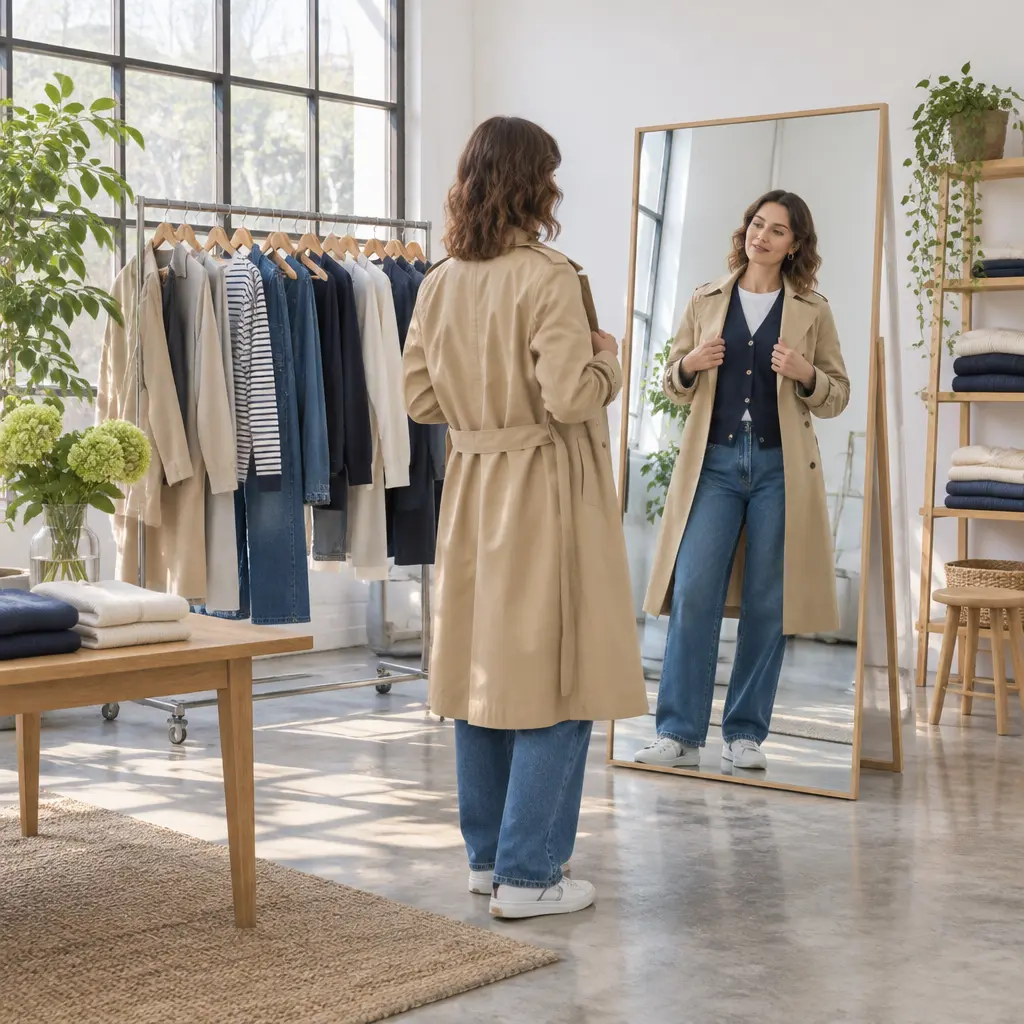
Layering clothes is the practice of wearing complementary garments in an intentional order to manage warmth, comfort, and appearance. A stylist’s approach starts with a light base, adds structure or insulation, and finishes with a layer that suits the weather and outfit. The key is balancing fabric, proportion, and color rather than simply piling on pieces. This guide explains the layer system, styling principles, seasonal adjustments, and practical outfit examples. It also draws on the U.S. National Weather Service’s guidance to dress in layers for changing conditions and the U.S. Environmental Protection Agency’s finding that indoor temperatures and personal comfort vary—both reminders that adaptable clothing can be useful beyond outdoor adventures.
How Layering Clothes Works: The Stylist’s Three-Layer System
A useful definition of clothing layers comes from outdoor apparel guidance: garments are arranged to manage moisture, retain warmth, and protect against wind or precipitation. The National Weather Service recommends wearing several light layers rather than relying on one heavy garment, because layers can be added or removed as conditions change. In everyday styling, the same principle becomes a flexible three-part framework: a base layer, a middle layer, and an outer layer. These are categories, not rules; a mild day may call for only two.
Base layer: comfort next to the skin
The base layer is the first garment, such as a T-shirt, fine-knit top, camisole, or thermal shirt. Its job is to feel comfortable, provide coverage, and create a smooth foundation. For daily wear, cotton, modal, silk, and lightweight merino can all work, depending on the weather and desired feel. For exercise or damp conditions, synthetic performance fabrics or merino wool are often chosen because they can move moisture away from the skin more effectively than ordinary cotton. Keep this layer relatively close to the body so it does not bunch beneath the next piece.
Middle layer: warmth, texture, and outfit character
The middle layer supplies insulation and usually gives the outfit its most visible texture. Examples include a cardigan, sweater, fleece, waistcoat, overshirt, or blazer. A stylist may use a fine-gauge knit beneath a jacket for a neat silhouette, or a substantial cardigan over a fitted tee for relaxed volume. The U.S. National Park Service’s cold-weather guidance similarly treats insulating clothing as a way to retain warmth; in a street outfit, the same function can be delivered by wool, fleece, quilted fabric, or a dense knit.
Outer layer: weather protection and visual finish
The outer layer shields the outfit from wind, rain, or cold and establishes its final silhouette. Common options include trench coats, rain shells, denim jackets, leather jackets, wool coats, and parkas. Choose the outer layer for the day’s conditions and for the garments beneath it: a roomy coat accommodates a sweater, while a tailored jacket works best over slimmer pieces. A practical wardrobe can include a water-resistant shell for wet weather and a warmer coat for cold, dry days rather than expecting one coat to perform every role.
How to Layer Clothes for Proportion, Color, and Texture
Once each layer has a purpose, styling becomes a matter of making the pieces look intentional together. The most reliable methods control bulk, create a clear visual line, and repeat colors or textures. These principles apply to casual outfits as well as office or occasion dressing.
Balance volume and length
Proportion describes how garment lengths and widths relate to one another. If a roomy sweater is worn under a coat, a straighter trouser or a defined waist can keep the outfit from feeling shapeless. A long shirt hem can peek beneath a shorter knit, while a cropped jacket can balance a longer base layer. Try the complete outfit while standing and sitting; sleeves, hems, and coat closures should remain comfortable rather than pulling or bunching.
Build a deliberate color palette
A palette is the small set of colors that ties an outfit together. A simple approach is to combine neutrals—such as navy, gray, cream, brown, or black—with one accent color. Another is tonal dressing, in which several shades of one color are layered together, such as pale blue, denim, and navy. Repeating a color in two places, such as a scarf and shoes, can make mixed layers feel cohesive without requiring identical matching.
Mix textures without adding unnecessary bulk
Texture is the visible or tactile surface of a fabric. Pairing different textures—such as smooth cotton, ribbed knit, brushed wool, denim, or leather—adds depth even when the colors are restrained. To prevent bulk, place thinner, smoother fabrics closer to the body and reserve thicker or more structured materials for outer layers. Avoid stacking several bulky collars or heavy knits in the same area; an open neckline or a lighter shirt can create breathing room.
How to Layer Clothes for Different Seasons and Settings
The best layering formula depends on temperature, wind, rain, activity, and how much time will be spent indoors. The National Weather Service advises adjusting clothing to conditions, while the U.S. Centers for Disease Control and Prevention recommends taking precautions against cold exposure. For style, this means selecting layers that are easy to remove and carry rather than dressing for one temperature alone.
Spring and fall: adaptable transitional layers
Transitional seasons often bring changing temperatures over a single day. Start with a breathable shirt, add a light knit or overshirt, and finish with a trench, denim jacket, or unlined blazer. A compact scarf or thin vest can add warmth without requiring a heavy coat. For example, a white tee, fine cardigan, straight-leg jeans, and a lightweight trench can move from a cool morning commute to a warmer afternoon by removing the cardigan or coat.
Winter: warmth with manageable bulk
In winter, use a comfortable base, an insulating middle layer, and a coat that protects against the actual conditions. A thermal top under a wool sweater and a wind-resistant coat is more adaptable than one oversized garment alone. Add gloves, a hat, and a scarf when exposed skin needs protection. The CDC notes that cold exposure can lead to hypothermia, including in cool weather, so warmth and coverage are practical safety considerations as well as style choices. Do not make a coat so tight that it compresses the insulation or restricts movement.
Warm weather and air-conditioned spaces
Light layering can still be useful in warm weather, especially when moving between heat outdoors and air-conditioned interiors. Choose breathable pieces such as a linen shirt, lightweight cotton cardigan, or unlined jacket that can be carried easily. The U.S. Environmental Protection Agency explains that thermal comfort is influenced by factors including air temperature, humidity, air movement, clothing, and activity; consequently, a removable layer can help an outfit feel comfortable across different indoor environments.
Work, travel, and active days
For work, choose layers that maintain a clean outline: a shirt beneath a fine sweater and blazer, for instance. For travel, prioritize pieces that combine easily, resist creasing, and can be removed quickly at security or in a warm cabin. For walking or outdoor activity, select a moisture-managing base and a protective outer shell, and avoid overdressing before exertion. A practical example is a merino or synthetic base, a light fleece, and a packable rain shell, with each piece serving a distinct function.
A Stylist’s Step-by-Step Layering Checklist
A repeatable checklist makes layering easier and helps avoid buying pieces that only work in one outfit.
- Check the forecast, including wind and precipitation, and consider how much time you will spend indoors.
- Choose a comfortable base layer suited to your activity and the temperature.
- Add one middle layer for warmth, texture, or structure.
- Select an outer layer that fits over the full outfit and protects against the weather.
- Check sleeve and hem lengths, shoulder fit, and whether the layers allow comfortable movement.
- Limit competing colors or bulky details; repeat a color or texture to connect the outfit.
- Remove or add a piece before leaving so the outfit works across the day’s changing conditions.
Conclusion: Layer Clothes with Purpose
Stylistic layering works best when every garment has a clear role: the base supports comfort, the middle adds warmth or character, and the outer layer handles weather and completes the silhouette. Proportion, palette, and texture make the combination look considered, while seasonal adjustments keep it practical. Start with pieces already in your wardrobe, test combinations in front of a mirror, and note which layers work across multiple settings. For further guidance, consult weather-service advice for the conditions you face and clothing-care information for the fabrics you wear.
Sources: National Weather Service, “Dress for the Weather,” https://www.weather.gov/safety/cold-dress; National Park Service, “Cold Weather Safety,” https://www.nps.gov/articles/000/cold-weather-safety.htm; U.S. Centers for Disease Control and Prevention, “Preventing Hypothermia,” https://www.cdc.gov/winter-weather/prevention/index.html; U.S. Environmental Protection Agency, “Climate Change and Indoor Air Quality,” https://www.epa.gov/indoor-air-quality-iaq/climate-change-and-indoor-air-quality