
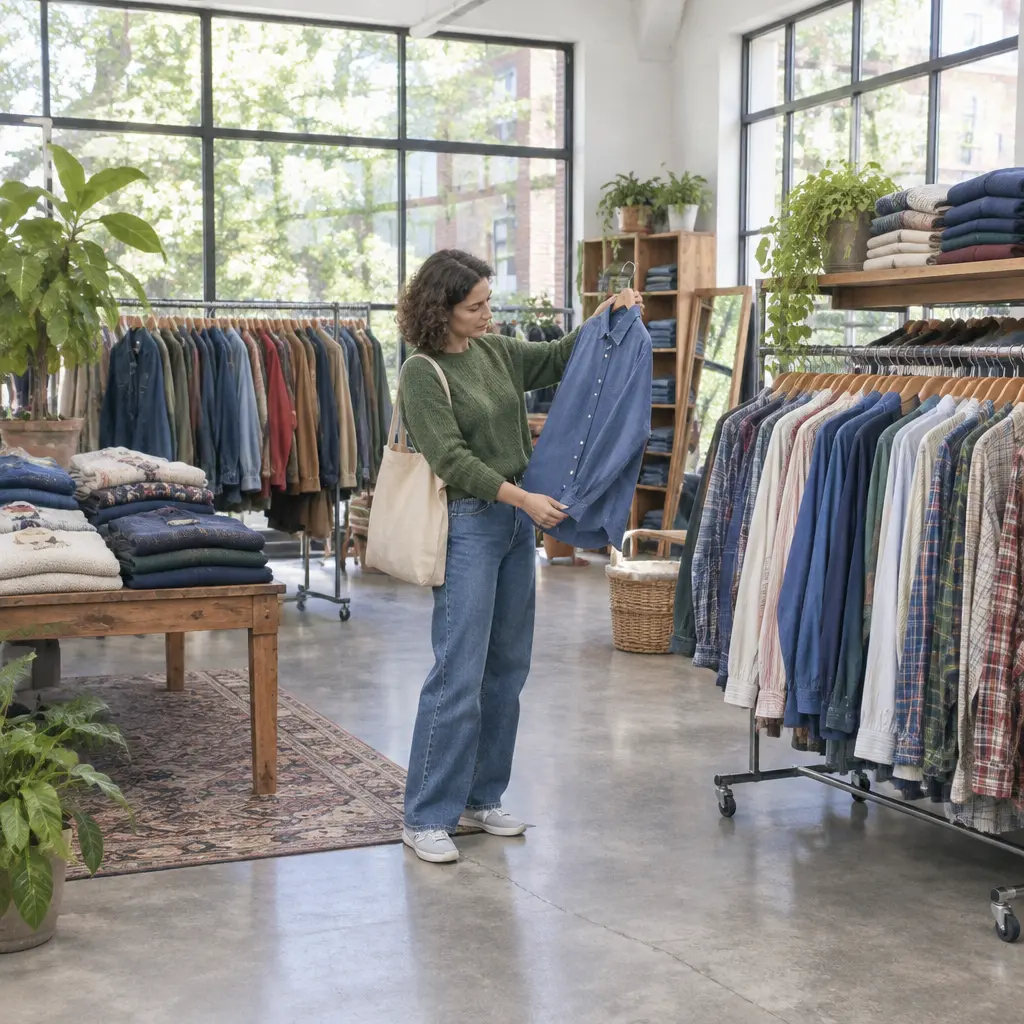
Fast fashion means producing and selling inexpensive clothing quickly in response to changing trends; slow fashion prioritizes longer use, considered purchasing, and more durable design. The choice matters because clothing production and consumption have significant environmental and social impacts: the United Nations Environment Programme (UNEP) estimates that the textile industry accounts for 2% to 8% of global greenhouse-gas emissions. Understanding how the two models differ—from production speed and garment quality to labor and disposal—can help shoppers make more informed decisions without assuming that any single label guarantees sustainability.
Fast Fashion and Slow Fashion: How the Models Differ
Fast fashion is a business model built around rapidly translating trends into affordable garments, often with frequent new releases. Slow fashion is an approach to making, buying, and using clothes that favors longevity, thoughtful consumption, and greater attention to materials and production. These are broad descriptions, not standardized certifications: a brand’s claim to be “slow” or “sustainable” should be evaluated against specific evidence.
Fast fashion: speed, price, and high turnover
Fast fashion companies use trend monitoring, short design-to-sale cycles, and frequent product launches to respond quickly to consumer demand. Low prices and broad availability can make current styles accessible, but the model can also encourage frequent purchasing and short garment use. The European Environment Agency reports that textiles consumed in the European Union had, on average, the fourth-highest impact on the environment and climate among household consumption categories in 2020, after food, housing, and mobility.
Slow fashion: durability and considered consumption
Slow fashion emphasizes buying fewer items, choosing garments intended to last, caring for them, and repairing or reusing them where practical. It can include secondhand shopping, made-to-order clothing, local production, and classic or adaptable designs. The term describes a set of priorities rather than a guarantee: a higher price or “conscious” label alone does not prove that an item has lower impacts or that workers were treated fairly.
Fast Fashion and Slow Fashion: Environmental Impacts
The environmental footprint of clothing depends on more than how quickly a brand releases new products. Fiber production, manufacturing energy, dyeing and finishing, transport, how often an item is worn, and what happens after use all contribute. UNEP’s estimate of 2% to 8% of global greenhouse-gas emissions reflects a wide range because textile-sector estimates differ in methods and boundaries; it is best understood as an indication of substantial impact, not a single precise measurement.
Materials, water, and pollution
Cotton, polyester, viscose, wool, and other fibers have different resource and pollution profiles. Synthetic fibers such as polyester are made from fossil-based feedstocks and can release microfibers during washing; natural fibers also have impacts, including land, water, chemical, and processing demands that vary by farming and manufacturing practice. The European Environment Agency identifies textile production and consumption as contributors to pressures on water, land, raw materials, and climate. A fiber name by itself therefore cannot tell shoppers the full impact of a garment.
Use and garment lifetime
A garment’s impact per wear depends partly on how long it remains useful. The Ellen MacArthur Foundation’s report A New Textiles Economy estimated that the equivalent of one garbage truck of textiles is landfilled or incinerated every second worldwide. Extending the life of clothing through regular use, repair, resale, or donation can help reduce premature disposal, although reuse is most effective when it replaces the purchase of new clothing rather than simply adding more consumption.
Waste, recycling, and end-of-life claims
Clothing recycling is not a complete solution to overproduction. Many garments blend fibers, trims, and finishes that make separation and recycling difficult, and collecting clothes does not ensure that they will be recycled into new garments. The European Environment Agency has documented the scale of textile waste in Europe and the challenges of moving from a linear “make, use, discard” system toward circular use. Shoppers can prioritize wearing and repairing items first, then consider resale, donation, or appropriate textile collection options available locally.
Fast Fashion and Slow Fashion: Labor and Transparency
Clothing’s social impact is shaped by the conditions under which it is made, including wages, working hours, safety, worker representation, and the ability to raise concerns. These issues can occur across complex supply chains involving multiple factories and subcontractors. Neither a low price nor a sustainability claim, on its own, reveals how workers were treated.
Supply chains and worker protections
The International Labour Organization describes garment supply chains as globally interconnected and notes that the sector provides employment to millions of workers, many of them women. Rapid production schedules and volatile orders can put pressure on suppliers, but actual labor outcomes differ among brands, factories, and countries. Useful evidence includes public supplier lists, independent monitoring details, grievance procedures, and disclosures about wages and remediation—not just broad statements about ethical values.
What transparency can—and cannot—show
Transparency means making relevant information about a product or supply chain accessible, such as where a garment was made, what materials it contains, or which facilities supplied it. Disclosure can help outside groups identify risks and ask questions, but it does not automatically prove good working conditions. Shoppers can look for specific, verifiable information and consult independent reporting where available, while recognizing that auditing and certification systems differ in coverage and rigor.
Fast Fashion and Slow Fashion: How to Shop More Thoughtfully
Making a more considered purchase does not require replacing an entire wardrobe or buying only expensive labels. The most useful starting point is often to use what you own, identify what you genuinely need, and choose garments that fit your budget and are likely to be worn repeatedly.
Check quality, fit, and repairability
Before buying, consider whether the garment fits comfortably, suits more than one occasion, and can be cared for with the time and facilities available to you. Inspect seams, closures, fabric feel, and care instructions; these clues can help, but they are not a definitive test of longevity. Simple repairs, such as replacing a button or mending a seam, can keep a useful item in circulation.
Consider secondhand and resale
Buying used can extend a garment’s useful life and reduce demand for new production when it substitutes for a new purchase. Options include charity shops, vintage stores, clothing swaps, and resale platforms. As with new clothing, buy with a clear purpose: an inexpensive secondhand item that goes unworn is still an unnecessary purchase.
Evaluate claims and certifications
Terms such as “eco-friendly,” “green,” and “responsibly made” can be vague unless they are supported by clear, specific evidence. Check what a claim covers: a particular material, one production stage, a factory, or the whole product life cycle. Look for recognized standards and transparent documentation, and be cautious of claims that provide no scope, measurement, or independent verification.
A practical shopper checklist
- Pause before buying and ask whether the item fills a real need.
- Choose a fit, style, and care routine that make repeated wear realistic.
- Compare material and production information, not just marketing language.
- Explore repair, borrowing, swapping, or secondhand options where suitable.
- Keep garments in use and use local reuse or textile collection routes when they are no longer needed.
Fast Fashion and Slow Fashion: The Bottom Line
Fast fashion is defined by speed, frequent trend-driven releases, and low-cost access; slow fashion places greater emphasis on durability, care, reuse, and deliberate purchasing. Both labels cover varied practices, so shoppers should assess specific products and evidence rather than rely on branding. With the textile sector associated with substantial climate and resource pressures and large volumes of clothing reaching disposal, wearing items longer and avoiding purchases that will go unused are practical steps. Start with your next decision: buy only what you expect to wear, care for it, and repair or pass it on when appropriate.
Sources: United Nations Environment Programme, “UN Alliance for Sustainable Fashion addresses damage of ‘fast fashion’,” https://www.unep.org/news-and-stories/press-release/un-alliance-sustainable-fashion-addresses-damage-fast-fashion; European Environment Agency, “Textiles and the environment: the role of design in Europe’s circular economy,” https://www.eea.europa.eu/publications/textiles-and-the-environment-the; Ellen MacArthur Foundation, A New Textiles Economy: Redesigning Fashion’s Future, https://ellenmacarthurfoundation.org/a-new-textiles-economy; International Labour Organization, “The future of work in textiles, clothing, leather and footwear,” https://www.ilo.org/industries-and-sectors/textiles-clothing-leather-and-footwear


