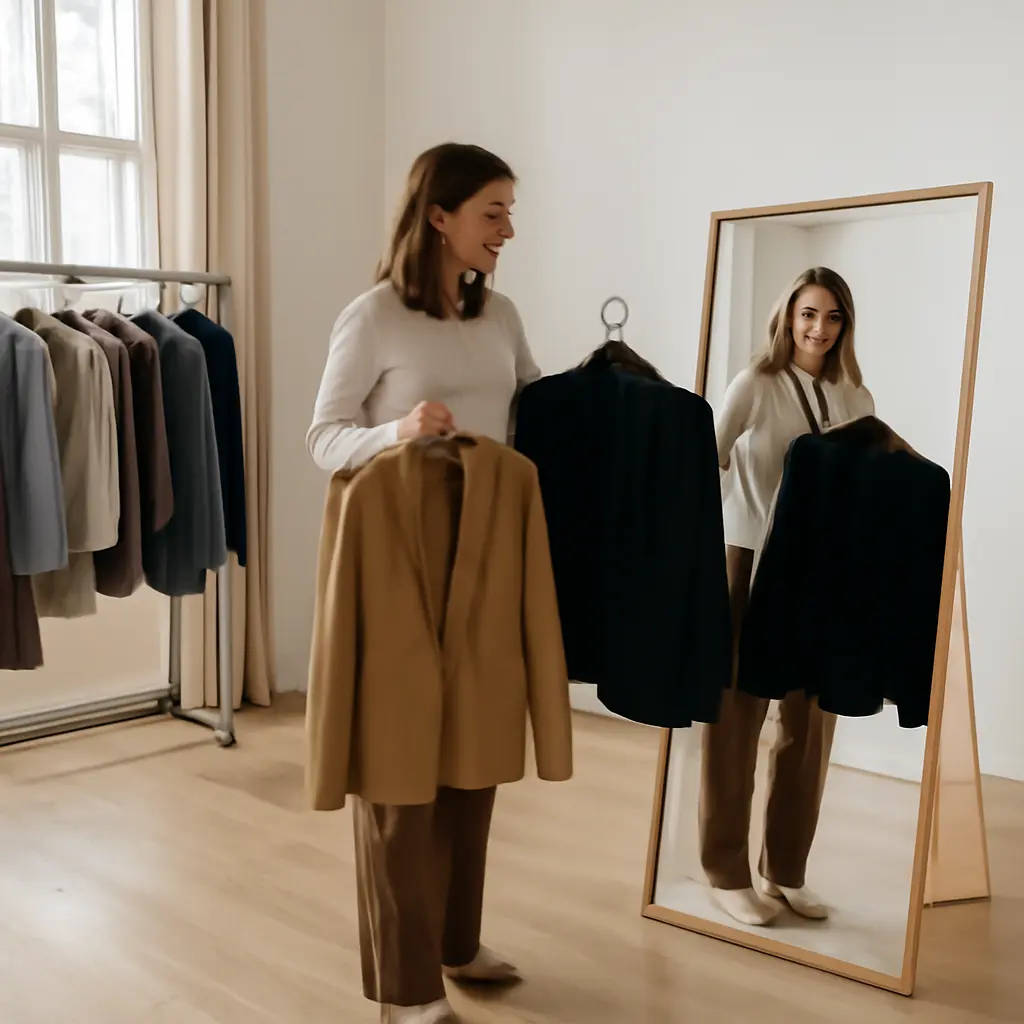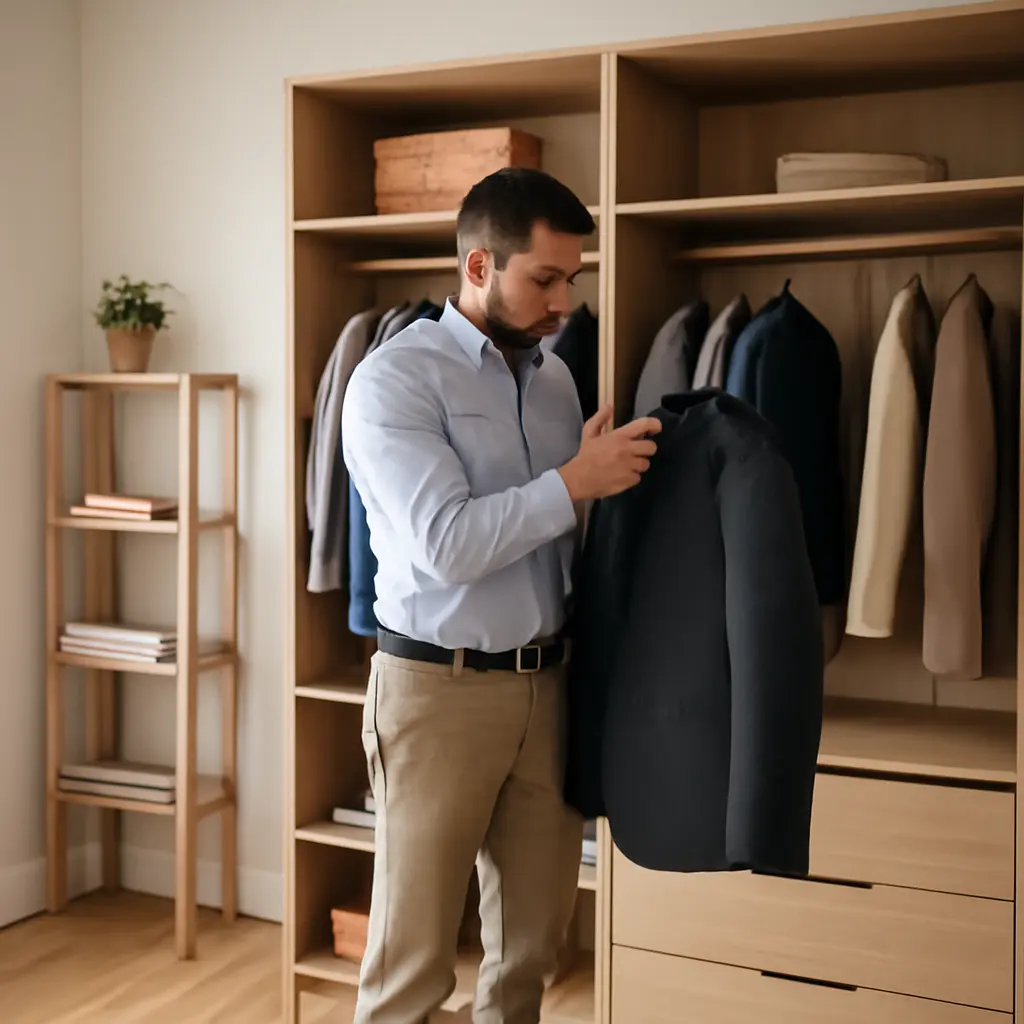
Professional style and comfort are not opposites: together, they describe clothing that communicates credibility while allowing the wearer to move and work comfortably. The most useful way to “break the rule book” is not to ignore context, but to replace rigid dress codes with thoughtful choices about fit, fabric, function, and workplace expectations. That approach matters as work becomes more flexible: Gallup reported that, among U.S. employees whose jobs can be done remotely, 52% worked in a hybrid arrangement and 27% worked exclusively remotely in late 2024. This article defines professional style and comfort, explains how dress norms are changing, and offers practical guidance for building a polished wardrobe without sacrificing ease.
Professional style and comfort as a workplace attribute
Professional style and comfort is the combination of appropriate presentation and physical ease in clothing chosen for a particular work setting. It is a practical wardrobe principle rather than a single formal dress code: a garment should support movement and concentration while fitting the expectations of the role, organization, and occasion. The U.S. Office of Personnel Management describes business-casual clothing in its federal workplace guidance as generally less formal than traditional business attire while still neat and professional; individual agencies may set their own standards.
The idea has several related forms, or hyponyms: business casual, smart casual, polished comfort, performance workwear, and hybrid-work dressing. They differ in formality, but share a common aim—looking intentional without relying on restrictive cuts, uncomfortable shoes, or fabrics poorly suited to the day’s tasks. “Breaking the rule book” therefore means questioning outdated conventions, not assuming that every workplace has identical expectations.
Comfort as fit, function, and freedom of movement
Comfort is the degree to which clothing supports a person’s physical needs throughout the workday. It includes fit, temperature regulation, stretch, breathability, appropriate footwear, and ease of movement. A garment can look polished on a hanger yet be unsuitable for a long commute, a standing shift, or repeated meetings if it restricts movement or causes discomfort.
The U.S. Bureau of Labor Statistics reported that full-time wage and salary workers averaged 8.1 hours of work on days they worked in 2023. That duration makes practical considerations meaningful: choosing layers for temperature changes, shoes suited to walking, and fabrics that maintain their shape can help clothing stay functional across a full day. These are design considerations, not a promise that any particular garment will improve health or performance.
Professional appearance as context, not a uniform
Professional appearance is the visual impression clothing creates in a specific setting. Its standards vary across industries, job duties, cultures, and occasions. A client presentation, laboratory shift, construction site, and remote video call each place different demands on clothing. A useful standard is whether the outfit is clean, intentional, safe for the task, and suitable for the audience—not whether it follows one universal formula.
This context-based approach also recognizes that professional dress should not be treated as a proxy for competence. Employers can make expectations clearer by focusing dress policies on legitimate needs such as safety, hygiene, identification, or client-facing requirements, rather than vague judgments about what looks “appropriate.”
Changing dress norms make professional style more flexible
Workplace dress norms are evolving because work itself is changing. Gallup’s 2024 reporting on U.S. remote-capable employees found that hybrid work was more common than fully remote work, while many employees continued to work on-site. The result is a varied landscape: one person may need video-call-ready clothing at home, commute-friendly layers for an office day, and more formal attire for a client meeting in the same week.
There is no single national statistic that captures how every employer defines “professional” clothing. Employer policies and job requirements differ, so broad claims that all workplaces have become casual would be misleading. The practical response is to identify the local standard, then find comfortable options within it.
Business casual and smart casual
Business casual generally sits between formal business attire and everyday casual clothing. Smart casual is similarly flexible, often allowing more personal expression while retaining a deliberate, well-finished appearance. Neither term has a universal definition, which is why employees should check written guidance or ask a manager when the boundary is unclear.
A practical interpretation might combine tailored trousers or a simple skirt with a knit top, clean footwear, and a structured layer. In a more relaxed office, dark jeans may be acceptable; in a client-facing role, they may not be. The principle is to adapt the outfit to the setting rather than treat a single example as a rule for everyone.
Hybrid-work dressing
Hybrid-work dressing means selecting clothing that works across home, office, travel, and video meetings. It can involve comfortable base layers, a camera-ready top, and a removable jacket or cardigan for changing temperatures and levels of formality. The goal is continuity: clothing should be comfortable while working at a desk and presentable when a meeting or workplace visit calls for it.
The Gallup hybrid-work figures provide context for this need, but they do not prescribe what anyone should wear. Individual roles, employer policies, and personal preferences remain decisive. A simple routine—checking the calendar and workplace setting before choosing an outfit—can prevent both overdressing and avoidable discomfort.
Build a comfortable professional wardrobe with deliberate choices
A comfortable professional wardrobe is a small, adaptable collection of clothing chosen to meet recurring work needs. The most reliable starting point is not a trend list; it is an inventory of the wearer’s actual week. Consider whether the job involves sitting, standing, commuting, lifting, frequent temperature changes, protective equipment, or regular in-person meetings.
Choose fabric and fit for the day’s demands
Fabric and fit affect how clothing feels and performs. Stretch can support movement; breathable materials may feel more comfortable in warm conditions; layers can help when temperatures vary. A good fit allows sitting, reaching, and walking without constant adjustment. Care instructions also matter: clothes that are easy to maintain are more likely to remain ready for repeated wear.
These are practical selection criteria, not universal scientific guarantees. Fabric performance depends on construction, climate, activity, and individual preference. When possible, try garments while moving through ordinary workday motions rather than judging fit only while standing still.
Use footwear and accessories functionally
Footwear should suit both the setting and the amount of walking or standing involved. A polished appearance does not require uncomfortable shoes: clean, well-maintained options with appropriate support can be professional in many workplaces. Safety-sensitive roles are different; protective footwear and other required equipment take priority over style preferences.
Accessories can also serve a purpose. A belt, bag, watch, or lightweight layer may make an outfit look more finished while supporting everyday tasks. Keeping accessories simple and functional helps avoid turning “professional” into an expensive or overly complicated standard.
Adapt personal expression to workplace expectations
Personal expression includes choices such as color, pattern, silhouette, and cultural or religious dress. A flexible approach can accommodate individual identity while meeting genuine safety and role requirements. Organizations should communicate expectations clearly and apply them consistently, taking account of applicable law and reasonable accommodation obligations.
For employees unsure how much freedom a workplace allows, observe the range of clothing worn by colleagues in comparable roles, consult the employee handbook, and ask a manager or human-resources contact about specific items. This is more reliable than assuming that a rule from another industry or company applies.
Apply the principle across roles and work settings
Professional style and comfort becomes most useful when applied to real tasks. The same person may need different clothing for a workshop, an office, a client visit, and a remote day. Rather than building a wardrobe around abstract labels, match clothing to the conditions and expectations of each setting.
Office and client-facing work
In an office or client-facing role, a coordinated outfit with clean lines and a comfortable fit can communicate care without requiring a full formal suit. A person might choose a knit jacket instead of a stiff blazer, or comfortable dress shoes instead of narrow heels, where workplace norms permit. For important meetings, checking the event’s stated dress expectations is more useful than relying on assumptions.
On-site, active, and safety-sensitive work
For active or safety-sensitive work, function comes first. Clothing may need to allow movement, withstand frequent washing, or work with personal protective equipment. The U.S. Occupational Safety and Health Administration emphasizes that employers must assess workplace hazards and provide required protective equipment at no cost to workers in many circumstances. Fashion choices should never replace mandated protective gear or conflict with safety instructions.
Remote work and video meetings
Remote work allows more control over comfort, but meetings can still create presentation expectations. A comfortable outfit that looks orderly on camera may be enough for routine internal calls, while customer-facing or formal meetings may warrant a more polished layer. Lighting, camera framing, and the meeting’s purpose also shape how clothing appears, so there is no need to dress identically for every remote workday.
Conclusion: make professional style work for people
Professional style and comfort are best understood as complementary attributes: a suitable appearance should support, not undermine, the workday. Fit, fabric, footwear, personal expression, and workplace context all matter, while business casual, smart casual, and hybrid-work dressing offer flexible ways to apply the principle. Changing work patterns—including Gallup’s finding that hybrid work predominated among U.S. remote-capable employees in late 2024—make adaptability especially relevant, but local policies and job duties still determine what is appropriate.
Start by reviewing your workplace guidance and the demands of your week. Then choose a few comfortable, versatile pieces that meet those needs, and ask your employer to make any unclear expectations explicit. For further reading, consult your organization’s dress and safety policies, federal workplace guidance, and OSHA resources relevant to your role.
Sources: Gallup, “Hybrid Work in the United States: 2024,” https://www.gallup.com/; U.S. Bureau of Labor Statistics, American Time Use Survey—2023 Results, https://www.bls.gov/news.release/atus.nr0.htm; U.S. Office of Personnel Management, Dress Code, https://www.opm.gov/policy-data-oversight/worklife/reference-materials/dress-code/; Occupational Safety and Health Administration, Personal Protective Equipment, https://www.osha.gov/personal-protective-equipment.