
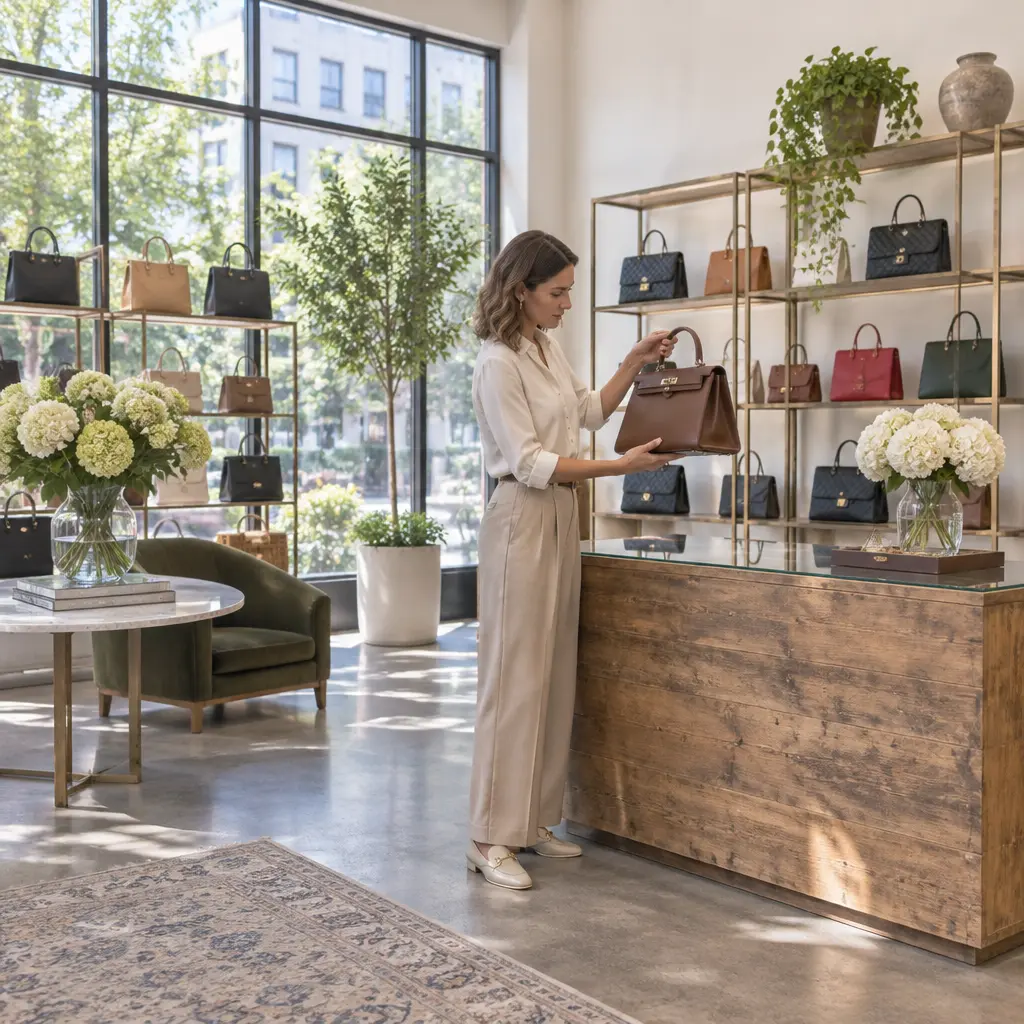
Investment handbags are luxury bags with the craftsmanship, brand recognition, and enduring demand that may help them retain value over time. They are not guaranteed financial investments: resale prices depend on condition, rarity, fees, fashion cycles, and the price originally paid. Still, certain Hermès, Chanel, and Louis Vuitton styles are often sought after on the secondary market. The strongest candidates to save for tend to be classic, recognizable designs—especially the Hermès Birkin and Kelly, Chanel Classic Flap, and Louis Vuitton Speedy—rather than bags bought solely because they are currently popular. Below, we explain what “investment” means in this context, compare leading styles, and outline how to buy and care for one realistically.
Investment Handbags: What Makes a Bag Worth Saving For?
There is no universally accepted financial definition of an “investment handbag.” In practical terms, it is a bag purchased with the expectation that it will provide years of use and may preserve more of its original cost than a less coveted alternative. That is different from a conventional investment: handbags do not produce income, can be costly to insure and maintain, and may be difficult to sell quickly at a favorable price.
The case for buying selectively rests on scarcity and secondhand demand. Luxury resale platforms such as Rebag have published annual reports tracking how selected brands and styles perform in their own marketplace; those figures are snapshots of a particular dataset, not a promise of future returns. Likewise, auction results reflect the specific bag, provenance, condition, and sale circumstances. A reported resale value should never be treated as a guaranteed price for every example of the same model.
A useful way to assess a candidate is to consider five factors together: sustained demand, recognizable design, quality of construction, condition, and the total cost of ownership. A well-kept classic in a broadly wearable color may appeal to more buyers than a highly seasonal style, but no combination removes market risk.
Classic icons and limited, collectible editions
Classic icons are established models that remain part of a brand’s identity, such as the Birkin, Kelly, and Chanel Classic Flap. Their long histories and strong name recognition can support resale interest. Limited editions and unusual materials can attract collectors, but scarcity alone does not ensure value: a niche design may have a smaller pool of buyers, and condition or authenticity concerns can complicate resale.
Retail price, resale price, and actual return
A bag advertised for a high resale price is not necessarily worth that amount to its owner. Sellers may face marketplace commissions, authentication or shipping charges, insurance costs, and the expense of maintaining the bag. The relevant comparison is the net amount received after those costs against the full purchase and ownership costs—not a headline estimate or asking price.
Hermès Handbags: Birkin and Kelly Resale Appeal
Hermès describes the Birkin and Kelly as handbags made by the house’s leather artisans. Both are associated with meticulous construction and a range of leathers, sizes, colors, and hardware. Their desirability is also shaped by restricted availability and long-standing cultural visibility. Those characteristics make them prominent in luxury resale, but the exact value of an individual bag depends on its specifications and condition.
Hermès Birkin: a structured everyday icon
The Birkin is a top-handle bag with a structured body, flap closure, and signature turn-lock hardware. It is offered in different sizes and materials, and those details can substantially influence both retail price and resale demand. Neutral colors and popular sizes may appeal to a wider range of buyers, while rare combinations can command attention among collectors—without guaranteeing a premium or a quick sale.
Before purchasing, compare the price of the specific bag with recent completed sales for closely matching examples. “Birkin” alone is not a sufficiently precise comparison: size, leather, hardware, year, accessories, and condition all matter. Buyers should also budget for secure storage and careful handling, particularly for delicate leathers.
Hermès Kelly: a formal silhouette with practical versatility
The Kelly is recognizable by its single top handle, flap, and turn-lock closure; many versions also include a shoulder strap. Its more defined silhouette can work for formal occasions as well as everyday use, depending on size and material. As with the Birkin, the name and craftsmanship contribute to its appeal, but there is no single universal Kelly resale price.
A prospective buyer should weigh how often the bag will be used against its cost and care requirements. A bag that suits the owner’s actual routine may deliver more reliable value through use than one purchased only in anticipation of appreciation.
Chanel Handbags: Classic Flap and 2.55
Chanel’s Classic Flap and 2.55 are among the most recognizable luxury shoulder bags. The house’s official history traces the 2.55 to February 1955, while the later Classic Flap is associated with the design language popularized by Karl Lagerfeld. Their chain straps, flap construction, and distinctive hardware make them easy to identify, while ongoing retail-price changes have helped keep attention on the cost of buying new versus pre-owned.
Chanel Classic Flap: enduring recognition
The Classic Flap is a quilted shoulder bag, commonly seen with a leather-interwoven chain strap and the house’s double-C clasp. Its recognizable design and broad brand visibility support continued buyer interest. However, resale performance varies by size, leather, hardware, color, age, and condition. A price increase at retail does not automatically translate into an equal increase in secondhand value.
When comparing examples, inspect corners, quilting, strap links, lining, and clasp function. Request clear photographs and documentation, and use a reputable authentication process. A lower-priced bag with substantial wear or uncertain provenance may prove more expensive in the long run than a verified, well-preserved example.
Chanel 2.55: a historically rooted alternative
The 2.55 is named for its February 1955 introduction and is distinguished by details such as its rectangular Mademoiselle turn-lock on many versions. It offers a historic design alternative to the double-C clasp of the Classic Flap. Collectors may value that distinction, but personal preference and condition should take precedence over assumptions that one model will outperform another.
Louis Vuitton Handbags: Speedy and Keepall
Louis Vuitton’s Speedy and Keepall draw on the house’s history of travel goods. They are generally more accessible entry points into the luxury handbag market than the most exclusive Hermès models, although prices vary by size, material, and edition. Their established designs and practical uses can make them appealing to owners who want a bag to carry regularly, not simply store as a collectible.
Louis Vuitton Speedy: a recognizable everyday bag
The Speedy is a compact, rounded-top handbag inspired by the brand’s travel-luggage tradition. It is produced in multiple sizes and finishes, including the familiar Monogram canvas. Its long-running recognition and everyday function may support resale interest, but common availability means it should not be assumed to appreciate. Older or special-edition versions require careful assessment of wear, repairs, and authenticity.
Louis Vuitton Keepall: a travel classic
The Keepall is a soft-sided travel bag with a long history in Louis Vuitton’s luggage range. Its larger capacity makes it useful for short trips, while its travel-oriented dimensions may limit its role as an everyday handbag. Buyers should check handles, seams, zippers, lining, and any included shoulder strap, since travel use can leave visible wear.
How to Choose and Buy an Investment Handbag
Choosing well starts with a budget and a clear purpose. Decide whether the priority is everyday use, collecting, or potential resale, then compare the full cost of each option. The best-known model is not automatically the best choice for every buyer: a smaller, more affordable bag that is used often may offer better personal value than a costly piece that rarely leaves storage.
Research comparable sales and ownership costs
Look for completed sales rather than relying only on seller asking prices. Compare like with like—including model, size, material, color, hardware, condition, and included accessories—and note the date and marketplace. Add applicable taxes, shipping, authentication, resale fees, insurance, and likely maintenance to your calculations.
Verify authenticity and condition
Buy from the brand or an established reseller when possible, and understand the seller’s authentication and return policies. Request proof of purchase where available, detailed photographs, and a written condition description. Serial numbers, date codes, packaging, or receipts can be useful evidence but should not be treated as proof on their own; counterfeiters can imitate or misuse such details.
Protect the bag and keep records
Store a handbag in a clean, dry place away from direct sunlight and excess humidity, and follow brand-specific care advice. Avoid overfilling it, which can distort its shape, and keep receipts, authentication documents, and service records together. Photographing the bag at purchase and after any repair can also help document condition for insurance or a future sale.
Conclusion: Buy for Use, Not Guaranteed Appreciation
The Birkin and Kelly, Chanel Classic Flap and 2.55, and Louis Vuitton Speedy and Keepall stand out for their established designs, brand recognition, and ongoing resale-market visibility. Those qualities may help some examples retain value, but handbags remain discretionary luxury goods—not guaranteed investments. A careful buyer compares completed sales, verifies authenticity, accounts for ownership costs, and chooses a style suited to real life. Before saving for a particular model, research current prices and resale conditions, set a budget you can comfortably afford, and buy the bag you will be happy to own even if its market value changes.
Sources: Hermès, The Birkin and Kelly Bags, https://www.hermes.com/us/en/content/297996-birkin-kelly-bags/; Chanel, The 2.55 Handbag, https://www.chanel.com/us/fashion/2-55-handbag/; Chanel, The Classic Handbag, https://www.chanel.com/us/fashion/classic-handbag/; Louis Vuitton, Speedy, https://us.louisvuitton.com/eng-us/products/speedy-bandouliere-25-monogram-nvprod5190089v/M46977; Louis Vuitton, Keepall, https://us.louisvuitton.com/eng-us/products/keepall-bandouliere-50-monogram-nvprod5190089v/M41416; Rebag, Clair Report, https://rebag.com/theclairreport/.